




01 / Observe
Anchor the evidence in metric space
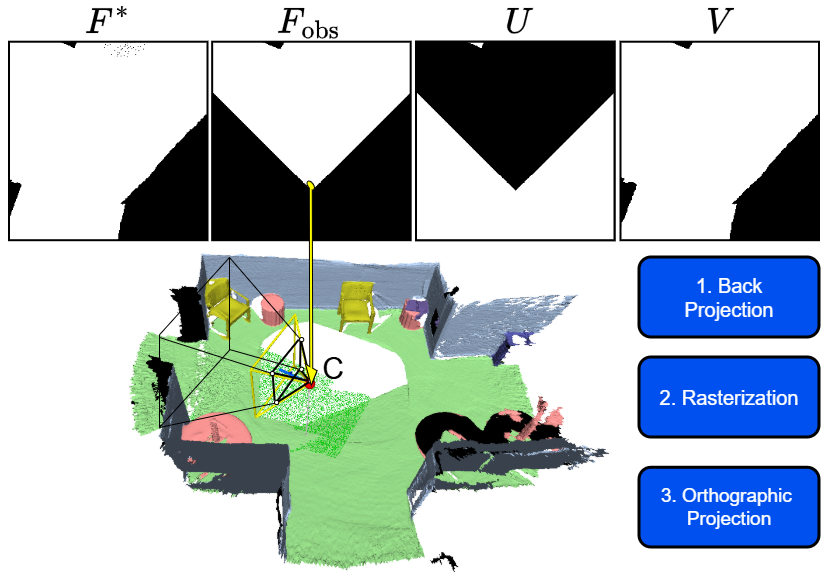
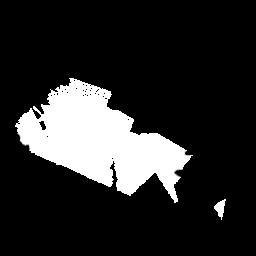
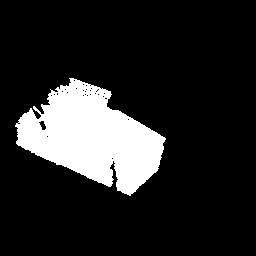
A virtual camera is placed at a physically valid pose in a reconstructed real scene. Visibility and ray occlusion determine exactly which floor cells the view supports in an aligned BEV grid.
Generative Floormap Completion · Computer Vision for Robotics
*Corresponding author · Subhransu.Bhattacharjee@anu.edu.au
A camera sees only a sliver of the floor. FlatLands asks what the room beyond it could look like—and where a robot should remain uncertain.
A single RGB frame reveals a narrow, occluded slice of traversable space. Several unseen layouts may explain exactly the same evidence, so a useful mapping system must preserve what it knows and represent what it cannot know from that view alone.
FlatLands separates perception from completion: first recover the visible floor in metric bird's-eye view, then model a distribution over the space beyond the camera frustum.
01 / Observe
A virtual camera is placed at a physically valid pose in a reconstructed real scene. Visibility and ray occlusion determine exactly which floor cells the view supports in an aligned BEV grid.
02 / Complete
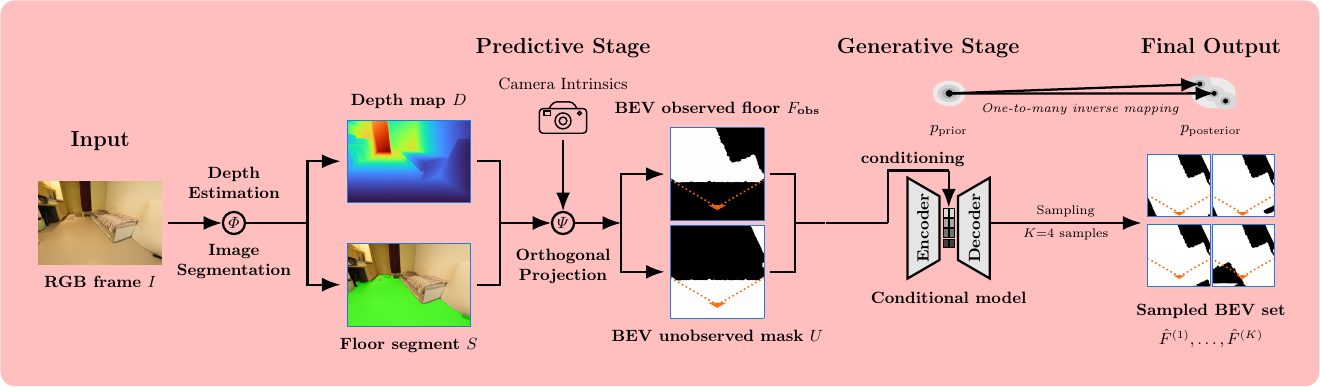
At inference, one RGB frame yields depth and floor estimates, which are projected into observed BEV evidence. A conditional generator samples possible layouts while observed labels remain hard-clamped.
The benchmark harmonizes distinct buildings, sensors, capture systems, and architectural styles into one metric BEV task. ScanNet++ is never seen during training and serves as the out-of-distribution test.

TUM + Google
Multi-session RGB-D reconstructions of naturally changing indoor environments, with aligned textured meshes and consistent instance-level semantic annotations across rescans.
FlatLands input: OBJ meshes with semantic floor labels.

Apple
Real-world mobile RGB-D captures collected with Apple LiDAR, including camera poses, surface reconstructions, registered depth, and labeled 3D furniture bounding boxes.
FlatLands input: PLY meshes with height-based floor extraction.

Matterport + Academic Partners
Building-scale RGB-D panoramas with globally aligned surface reconstructions, camera poses, and detailed 2D and 3D semantic segmentations across diverse real interiors.
FlatLands input: PLY meshes with semantic floor labels.

TUM + Stanford + Princeton
A large RGB-D video corpus of indoor scans with recovered 3D camera poses, reconstructed surfaces, and instance-level semantic segmentations for scene understanding.
FlatLands input: PLY meshes with semantic floor labels.

Zillow
Panoramas from real unfurnished homes with annotated room layouts, doors, windows, openings, 3D camera poses, and final 2D floor plans produced through a human-in-the-loop pipeline.
FlatLands input: Panoramas with metrically calibrated floor geometry.

TUM
High-fidelity indoor reconstructions coupling sub-millimeter laser scans, registered DSLR imagery, iPhone RGB-D streams, and long-tail semantic annotations.
FlatLands input: PLY meshes; held out entirely for OOD testing.
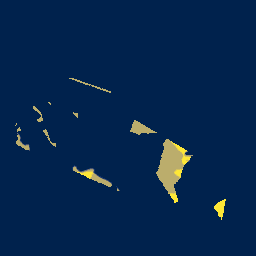
Every observation keeps the input evidence, completion region, full target, valid workspace, and provenance aligned cell by cell. Evaluation is restricted to cells that are both valid and unobserved.
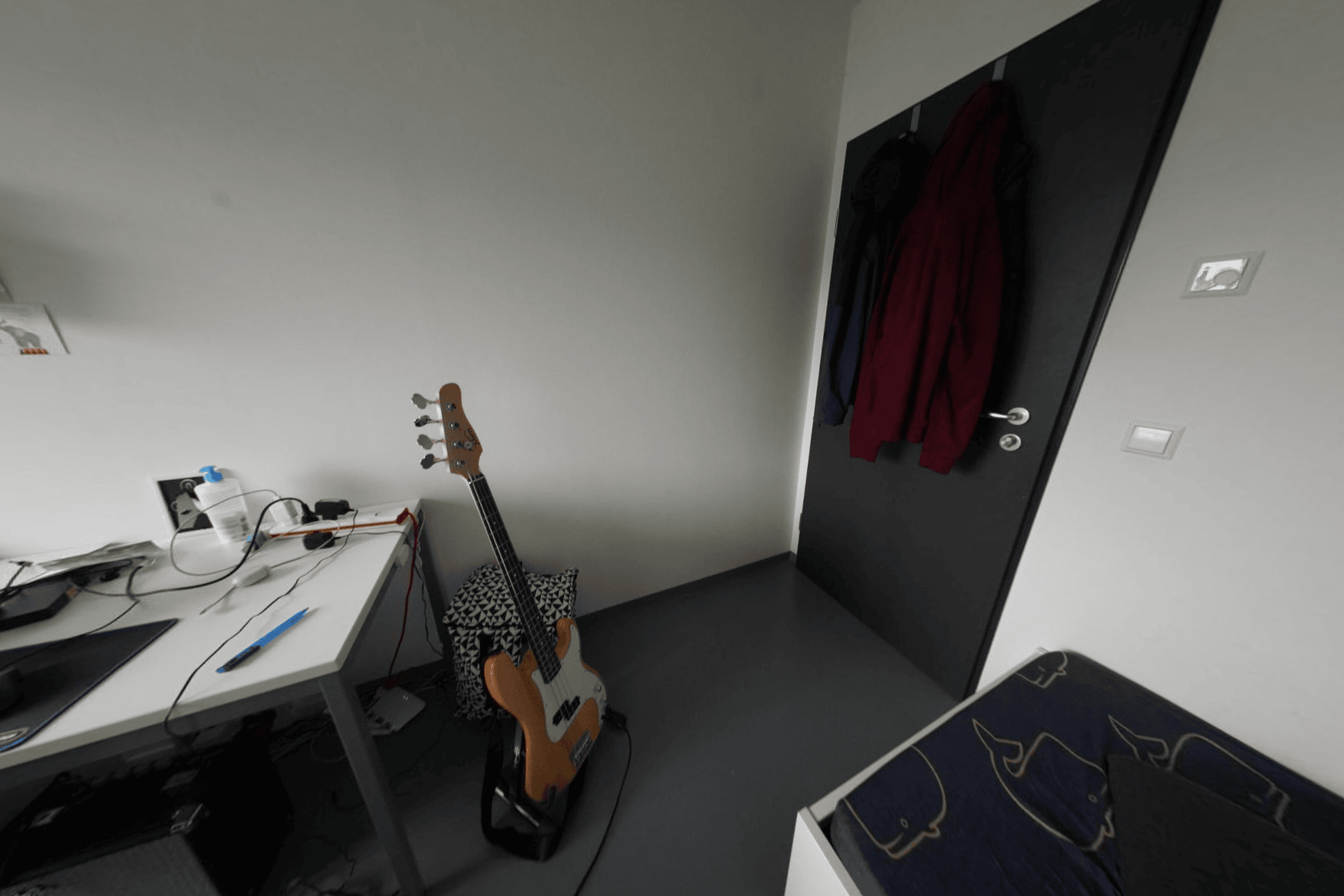
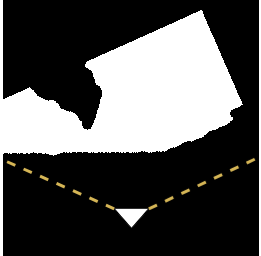

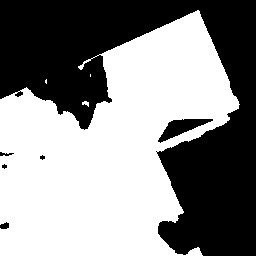

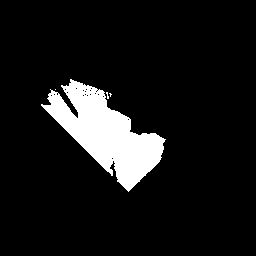
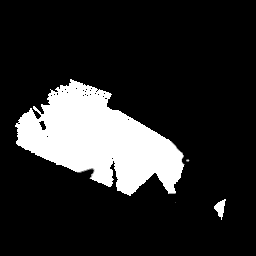
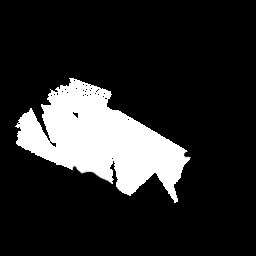
The four layouts below are real valid targets—not model samples. They agree on the shared observation and disagree only where the evidence permits different geometry. A calibrated model should cover those alternatives and localize uncertainty to their boundaries.
Eleven methods—from training-free rules and deterministic networks to diffusion and flow matching—receive the same evidence and are scored under one uncertainty-aware protocol.
Every stochastic generator surpasses every deterministic predictor when allowed to cover four plausible hypotheses.
Flow Matching with Cross-Attention leads the multi-sample energy score on both in-distribution and held-out OOD scenes.
Its boundary variance is about 600 times its interior variance, concentrating uncertainty where room geometry is unresolved.
Download the validated release from Hugging Face and find evaluation code and baseline implementations on GitHub.
hf download Rudra1ssb/FlatLands FlatLands_final_dataset.zip --repo-type dataset
unzip FlatLands_final_dataset.zip -d FlatLandsFlatLands is a derived research dataset. The original captures and reconstructions remain governed by their source terms. Review LICENSES.md before use.
If the dataset, benchmark, or models help your work, please cite the arXiv preprint.
@article{bhattacharjee2026flatlands,
  title     = {{FlatLands}: Generative Floormap Completion From a Single Egocentric View},
  author    = {Bhattacharjee, Subhransu S. and Campbell, Dylan and Shome, Rahul},
  journal   = {arXiv preprint arXiv:2603.16016},
  year      = {2026},
  eprint    = {2603.16016},
  archivePrefix = {arXiv},
  primaryClass  = {cs.CV},
  doi       = {10.48550/arXiv.2603.16016},
  url       = {https://arxiv.org/abs/2603.16016}
}FlatLands release materials are copyright (c) 2026 Subhransu S. Bhattacharjee, Dylan Campbell, and Rahul Shome.
The derived BEV maps, masks, metadata, statistics, provenance records, and release text are provided under the FlatLands release notice. Underlying RGB-D captures, meshes, point clouds, panoramas, and source archives retain their original terms.
Paper figures are reproduced under the paper's CC BY 4.0 license. Source names, institution names, trademarks, and logos belong to their respective owners and identify provenance only.
See COPYRIGHT.md, LICENSE, and LICENSES.md.